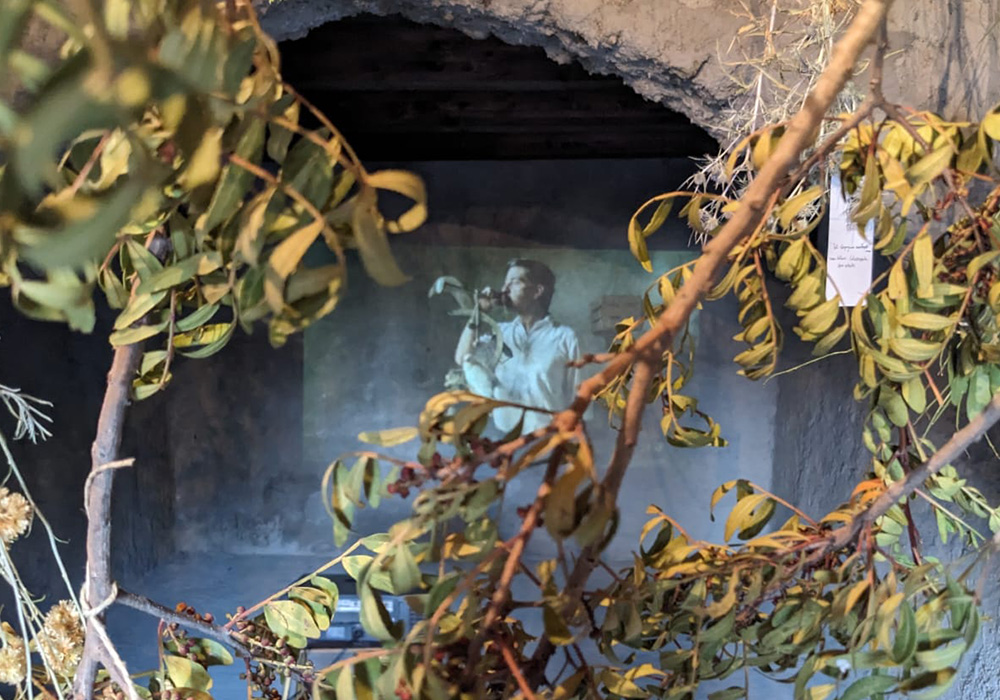
Capace di allontare i fulmini.
La cultura della frasca.
Eventi / Residenze / Cosimo Terlizzi

Il progetto nasce come esplorazione della memoria vegetale di un territorio.
L’artista ricerca e raccoglie piante spontanee endemiche in aree rurali o periferie urbane e, con l’aiuto degli abitanti locali, ne ricostruisce usi e proprietà.
Si attiva una riflessione su questioni ambientali, ecosistemiche, con l’obiettivo di sensibilizzare sulla biodiversità e la ricchezza di saperi locali, entrando in contatto e dialogo con la comunità e il territorio in maniera partecipativa e educativa.
Casa Motus is a place with a clear stance: it is on the side of those at the margins, standing against all forms of systemic violence, where care is a political act.
It is a place that fosters permeability between performing arts, ecological practices, critical thought, and daily lived experiences. An environment where the domestic sphere intertwines with the public realm, and artistic experience takes root in the surrounding landscape.
We believe in art born of dialogue, art that crosses the boundaries between disciplines and opens up to risk, the unexpected, and the 'Other'. What matters is not "what is produced," but how, for whom, and in relation to what.
Research is understood as an open process, a state of transformation between thought and creation, where ideas settle and relationships deepen.
Casa Motus looks towards the exchange of practices and dialogue between perspectives, contexts, and geographies.
San Giovanni in Marignano is also home to the Notte delle Streghe (Night of the Witches), an event that has assumed new symbolic and cultural meanings over the years, marking the summer solstice with rituals, storytelling, and collective participation.
Drawing from the theme of witches, Casa Motus proposes an intergenerational artistic model, rich in mythological meaning, aimed at recovering feminist and pre-capitalist knowledge.
Local rituals connected to the summer solstice, alongside Silvia Federici’s writings on the witch as a symbol of autonomy and resistance, are inspiring Daniela, Enrico, and project manager Francesca Danesi to shape future programming with an increasingly international perspective that is deeply rooted in these themes.
"A hybrid model as a direct challenge to structures that seek to erase the wisdom of women, the autonomy of the land, and our collective capacity to resist."
Casa Motus is not just a place — it is a space of rebellion, a radical reimagining of what it means to belong, to care, and to fight for a future rooted in solidarity, ecological justice, and the recovery of ancient feminine knowledge.
Casa Motus is a natural extension of the artistic and political experience of Motus, the theatre collective founded by Daniela Nicolò and Enrico Casagrande in 1991, now recognised as one of the most radical and influential voices in the European contemporary scene.
Over the years, Motus has created performances, site-specific projects, residencies, and performances that have rewritten the relationship between the stage and the audience, between space and body, between art and current events. The company’s work has always been driven by an ethical and poetic tension towards change, with a constant focus on the urgencies of the present and the movements sweeping the world.
Casa Motus inherits this legacy and propels it into a new dimension: not only as a place for artistic production but as an ecosystem. In this sense, it is a living extension of Motus's practice: a permanent laboratory for imagination, resistance, and relationships. A physical and symbolic space where creation can take root in time, cross-pollinate with other forms of knowledge, and forge unexpected alliances.
Cosimo Terlizzi (1973) è un artista visivo. Vive e lavora in Puglia.
Dalla metà degli anni Novanta sperimenta nel suo lavoro l’uso di diversi media, dalla fotografia alla performance, dall’installazione al video.
Le sue opere sono state esposte al Centre Pompidou a Parigi, MamBo di Bologna, Centre for Contemporary Art di Varsavia, Fondazione Merz di Torino, Galleria Civica d’Arte Contemporanea di Trento, MACRO di Roma, National Museum of Breslavia in Polonia.
Per il cinema firma la regia di documentari presentati a Rotterdam Int. Film Festival, Festival d’Automne a Parigi, Kunstenfestivaldesarts di Brussel, Biennale Danza di Venezia, Torino Film Festival, Festival Internacional de Cine de Mar del Plata, London Int. Documentary Festival, Festival Internazionale del Cinema di Roma e Homo Novus festival di Riga. Nel 2018 realizza con Buena Onda (casa di produzione di Valeria Golino, Riccardo Scamarcio e Viola Prestieri) il suo primo lungometraggio di fiction, Dei.
Dal 2019 al 2020 è stato il direttore artistico di Asolo Art Film Festival.
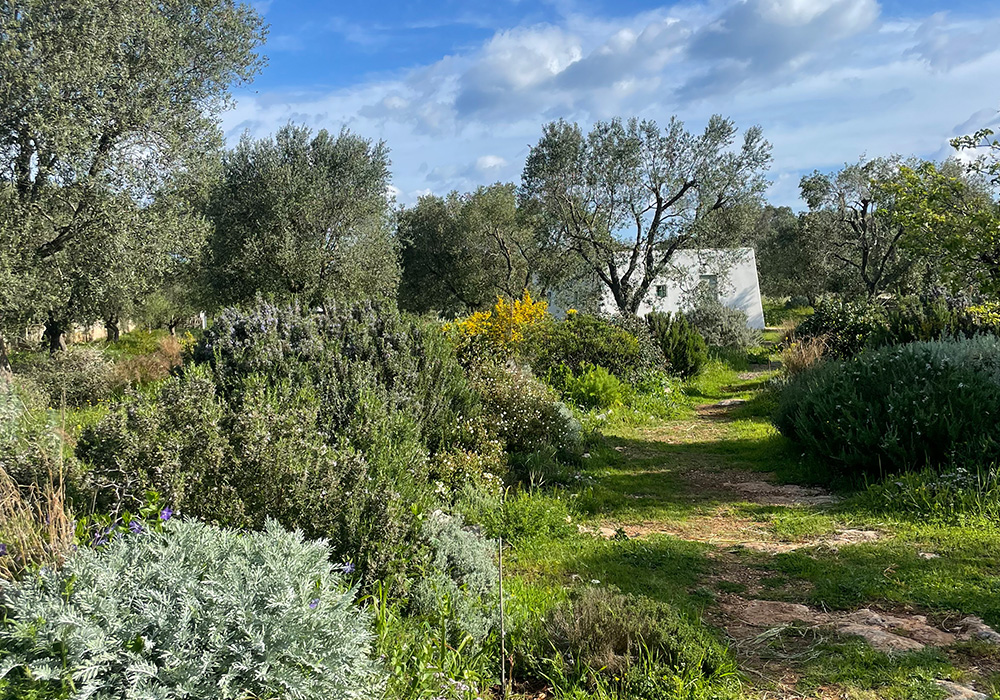
Nel 2020 crea a Carovigno (BR) lo studio Lamia Santolina, uno spazio di studio e ricerca nell’ambito della creazione contemporanea che interroga i rapporti ecosistemici dell’ambiente naturale.
All’interno della sua ricerca artistica, realizza interventi nel gardino accompagnato dal recupero e dalla moltiplicazione di piante endemiche e del bacino meditterrano resistenti alla siccità.
Il giardino di Lamia Santolina conta oggi più di 400 varietà di piante.